Mountain Home, NC · Henderson County
Basement Water Removal in Mountain Home, NCBasement Wall Drying & Basement Water Pump Out
After a burst pipe or storm, Basement Water Removal in Mountain Home means basement water pump out, basement wall drying and basement drying services.
Answered 24/7
Basement Water Removal Solutions for Mountain Home Homeowners
Basement Water Removal in Mountain Home starts with safety. Water near the furnace, water heater or electrical panel can be dangerous, so power is made safe before anyone steps into it.
In Mountain Home, when a basement or below-grade room takes on water, it usually follows heavy rain, a sewer backup or a burst pipe. Local basement drying experts serve Mountain Home, Balfour, Laurel Park and Horse Shoe, pumping water out and drying the space.
Comprehensive Basement Water Removal Solutions
Basement Wall Drying
Opening the bottom of finished walls lets air reach the studs and sill plate, which otherwise stay wet behind the drywall.
Basement Water Pump Out
A pump-out removes standing water from the basement with submersible pumps, discharging it outside and away from the foundation.
Basement Dehumidification
After drying, a household dehumidifier may still be needed to keep basement humidity in a healthy range.
Basement Moisture Inspection
Readings are recorded at each visit, giving you and your insurer a clear record of the drying.
Basement Drying Services
Drying plans for basements account for cool air and thick concrete, which hold moisture longer than upper floors.
Signs of Basement Water Damage in Mountain Home
Mold or Mildew
Dark spots on drywall, framing or stored items mean the area has stayed wet for days.
Musty Odors and Mold Smell
A musty or damp smell in the basement points to wet materials hidden somewhere in the space.
Soggy or Wet Carpeting
Carpet that feels damp or smells sour is holding water in the pad against the concrete.
Efflorescence on Concrete Walls
White, powdery deposits on concrete walls mean water is passing through the masonry.
How Basement Water Removal Works in Mountain Home
Step 1: Safety Assessment and Pump Out
Electrical hazards are checked, then deep water is pumped outside away from the foundation.
Step 2: Content Removal and Damage Documentation
Wet belongings are moved, and photos record the water level and damaged materials.
Step 3: Targeted Water Removal and Drying
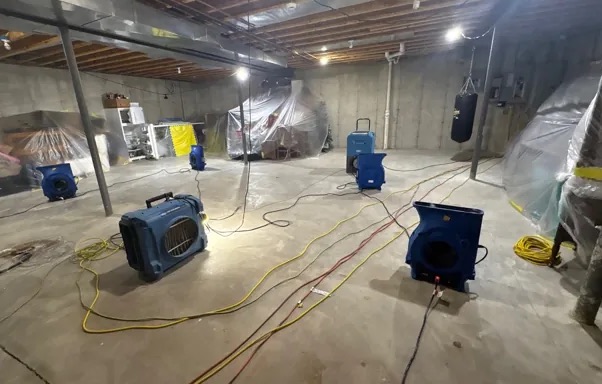
Carpet is extracted, wet drywall is cut back and air is aimed at walls and the slab.
Step 4: Sanitization and Moisture Control
Surfaces touched by dirty water are disinfected, and dehumidifiers keep humidity low.
Why Basements Flood in Mountain Home
Appliance Malfunctions and Overflows
Washers, utility sinks and water softeners in the basement can overflow or leak.
Plumbing Leaks or Pipe Bursts
Supply lines, drain pipes and water heaters in the basement can leak or burst onto the floor.
Clogged or Damaged Gutters
Clogged gutters and short downspouts dump roof water right next to the foundation.
Window Well Leaks and Drainage
Window wells without drains or covers fill with rain and leak through the windows.
Residential and Commercial Basement Water Removal in Mountain Home
Residential Basement Water Removal
In homes, a wet basement often means damaged carpet, drywall and stored belongings, plus a furnace or water heater sitting in water. Water is pumped out and the space dried.
Commercial Basement Water Removal
In commercial buildings, basements often house mechanical rooms and storage. Water is removed quickly so systems can be checked and restarted safely.
The Risks of DIY Basement Water Removal
Fans by themselves can spread damp basement air through the rest of the house. Basement drying needs dehumidifiers that pull moisture out of both the air and the concrete.
Factors Affecting Basement Water Removal Cost
In Mountain Home, the drying phase usually costs more than the pumping, because basements need equipment running for several days.
Access and Complexity
Narrow stairs, low ceilings and crowded storage areas make the work slower and longer.
Water Depth and Volume
Deeper water takes more pumping time and usually means more materials got wet.
Additional Services
Antimicrobial treatment, contents cleaning and repairs after drying add to the cost.
Does Insurance Cover Basement Water Removal?
Flooding from outside water usually needs separate flood insurance. Water from a broken pipe or appliance inside is more often covered.
Why Mountain Home Homeowners Trust Local Pros for Basement Water Removal
Industry Drying Standards
Water removal and drying follow industry water damage standards, with readings at every visit.
Post-Service Moisture Verification
Final readings are recorded before equipment leaves, so you know the basement is dry.
24/7 Emergency Response
Help is available day or night when water is rising in the basement.
Round-the-Clock Basement Water Removal for Mountain Home
Standing water in a basement soaks walls and floors by the hour. Call (828) 492-3606 for basement water removal in Mountain Home at any time, day or night.
Call Now (828) 492-3606Basement Water Removal Serving Mountain Home and Surroundings
Help with basement water removal reaches Balfour, Laurel Park and Horse Shoe, plus other communities around Mountain Home, for finished and unfinished basements alike.
- Basement Water Removal in Balfour
- Basement Water Removal in Laurel Park
- Basement Water Removal in Horse Shoe
- Basement Water Removal in Fletcher
- Basement Water Removal in Mills River
- Basement Water Removal in Fruitland
- Basement Water Removal in Valley Hill
- Basement Water Removal in Hoopers Creek
- Emergency Damage Restoration in 28758
- Storm Damage Restoration in 28758
- Water Damage Restoration in 28758
- Water Extraction Service in 28758
- Water Leak Detection in 28758
- Water Removal Service in 28758
Basement Water Removal FAQs
How is contaminated water handled in a basement?
With protective gear, containment, removal of porous materials and disinfection of hard surfaces before drying.
What causes basement floor water damage?
Storm seepage, burst pipes, appliance leaks, foundation cracks and sewer backups through floor drains are the usual sources.
What equipment is used for basement water extraction?
Submersible pumps, extractors, wet vacs, air movers, large dehumidifiers and moisture meters to confirm drying.
Is a sump pump failure an emergency?
Yes, especially during rain. Groundwater can rise quickly once the pump stops, flooding the floor and finished rooms.
How does a basement moisture inspection work?
Moisture meters and thermal cameras check walls, floors and the slab, including behind finished walls and under flooring.